

Phoran
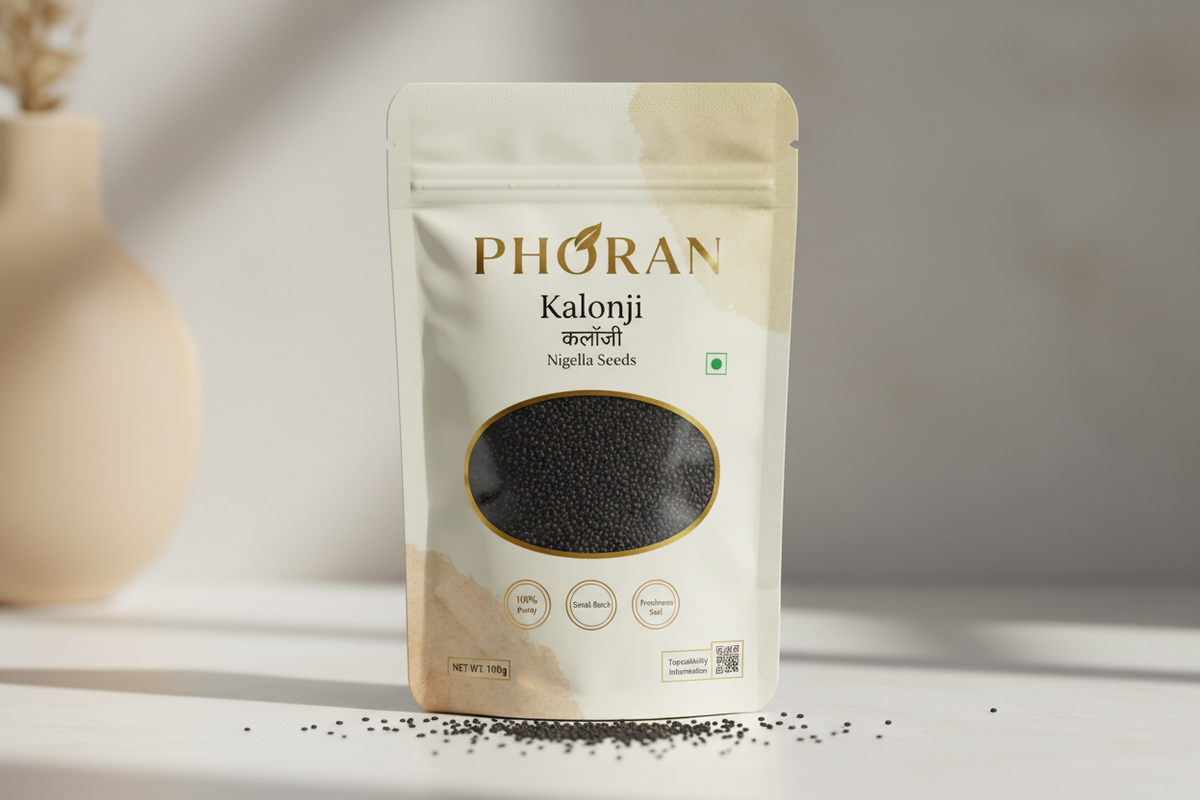
Kalonji (Nigella Seeds) | Whole Spice
Kalonji (Nigella Seeds) | Whole Spice
Couldn't load pickup availability
Kalonji (Nigella Seeds) — Peppery, Smoky, Unmistakable
Kalonji is one of those spices that is instantly recognisable once you know it — the small black seeds on naan bread, the peppery-smoky note in Bengali pickles, one of the five seeds in Panch Phoran. Despite being called ‘onion seeds’ or ‘black cumin’ in some regions, kalonji is neither — it is Nigella sativa, a completely distinct plant with its own unique flavour profile. Phoran's kalonji is clean, potent, and carefully sorted for consistent seed size.
What Does Kalonji Taste Like?
Raw kalonji has a sharp, slightly bitter, peppery flavour with a subtle oregano-like note. When cooked in oil or baked into bread, the bitterness softens and a warm, smoky, complex flavour emerges. It is distinctive enough to be recognisable in a dish but rarely overpowering when used in normal quantities.
How to Use Kalonji
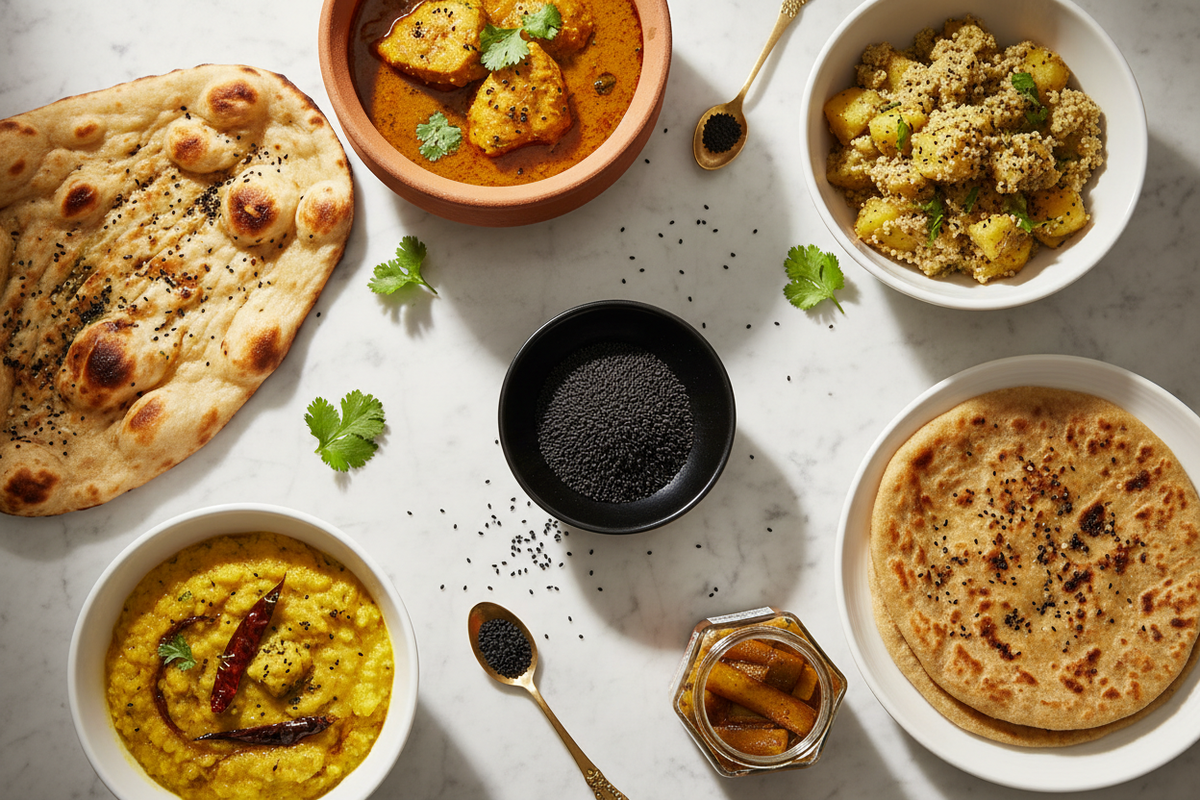
- Naan and flatbreads: Press seeds onto the surface before baking — the heat releases their aroma through the bread.
- Parathas: Knead ¼ tsp into dough for a subtle peppery note
- Pickling (achaar): Essential in Bengali and North Indian pickles — add to the mustard oil base
- Panch Phoran: One of the five seeds — equal parts with jeera, rai, methi, and saunf for Bengali tempering
- Dal tadka: Add a pinch to the ghee tempering for depth and visual appeal
- Vegetable sabzi: Sprinkle into the oil tempering for aloo or cauliflower dishes
Kalonji vs Black Cumin (Shahi Jeera) — Are They the Same?
No — these are completely different spices that are frequently confused. Kalonji (Nigella sativa) is a small, angular black seed with a peppery, slightly oregano-like flavour. Black cumin or Shahi Jeera (Bunium persicum) is a thin, elongated seed with an anise-like, complex flavour used in biryanis and kormas. They look different and taste different — not interchangeable.
Regional Names for Kalonji
Kalonji (Hindi) = Karum Jeerakam (Tamil) = Nalla Jilakara (Telugu) = Krishna Jeerige (Kannada) = Kala Til (Marathi) = Kalo Jeera (Bengali — though this term is also used for black cumin, creating confusion).
Storage: Airtight container, away from heat and light. Whole seeds retain potency for 2 years. Origin: India (Rajasthan/Madhya Pradesh).