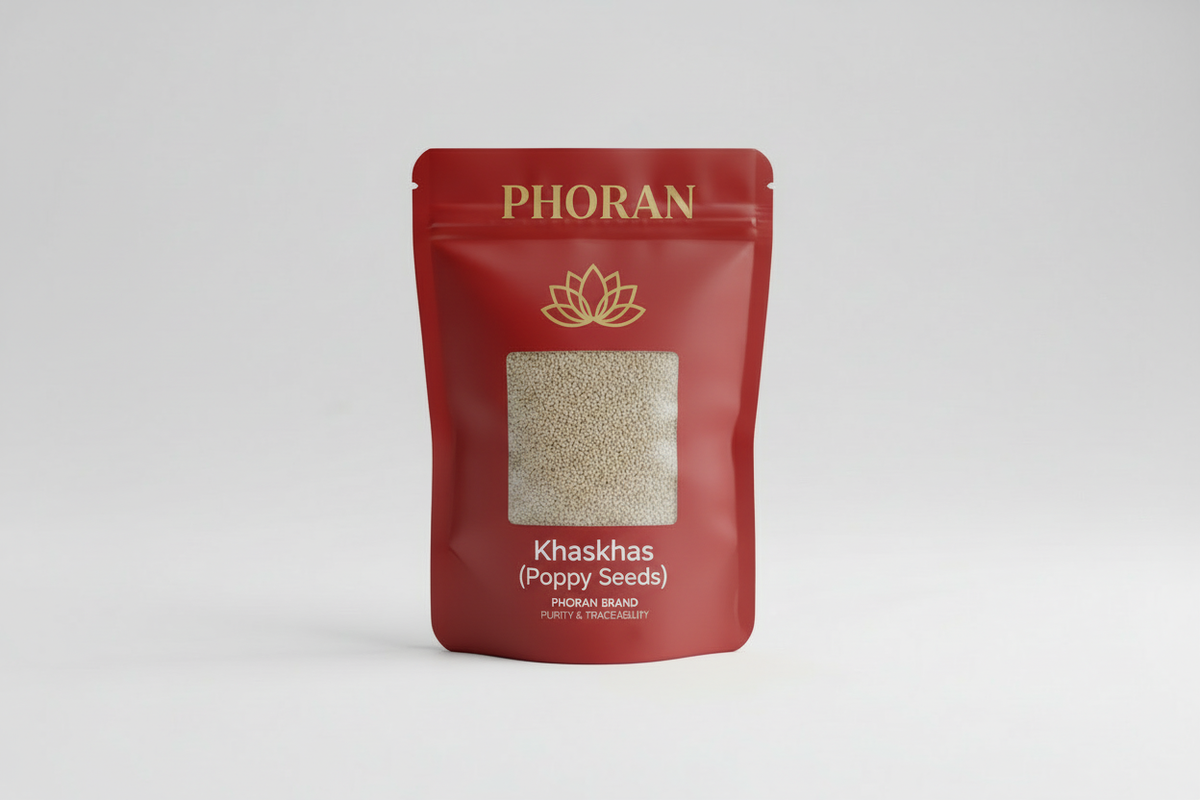
Khaskhas are the secret behind the velvety, creamy texture of Mughlai kormas and the silky richness of aloo posto — Bengali potatoes in poppy seed paste. These tiny white seeds have almost no aroma raw but when soaked and ground, they release a mild nutty richness that thickens gravies and adds a distinctly creamy mouthfeel without cream or dairy. Phoran's khaskhas is carefully sorted and freshly packed for full flavour and natural colour.
How to Use Khaskhas (Poppy Seeds)
Soaking and grinding (most common): Soak 2 tbsp khaskhas in warm water for 30 minutes, drain, grind to a smooth paste — use as a thickener and creaminess-builder in korma, shahi gravies, and Bengali curries
Aloo posto (Bengali classic): Fry potatoes in mustard oil, add khaskhas paste with green chilli and a pinch of turmeric, cook until the paste coats the potatoes — one of Bengal's most beloved everyday dishes
Mughlai korma: Add khaskhas paste to the onion-yoghurt base for authentic creamy texture without heavy cream
Halwa: Dry roast and grind with sugar and ghee for a traditional khaskhas halwa
Bread and baking: Sprinkle whole seeds on top of naan, bread rolls, or cookies before baking
Gravies: Add paste to any rich curry that needs body and creaminess — works in paneer, chicken, and vegetable preparations
Why Do Poppy Seeds Make Gravy Creamy?
Khaskhas seeds are high in natural oils and fine starch. When soaked and ground into a paste, these compounds emulsify with water and fat to create a stable, smooth, creamy consistency in the gravy. This is why Mughlai cooking uses khaskhas paste instead of cream — it thickens without making the dish heavy, and adds a subtle nutty depth that cream alone cannot provide.
White vs Blue/Black Poppy Seeds
Indian cooking uses white poppy seeds (khaskhas) almost exclusively — mild, creamy, and ideal for pastes and gravies. Blue or black poppy seeds (used in European baking) have a stronger, more pronounced flavour and are not a substitute in Indian recipes. If a recipe calls for khaskhas, use white poppy seeds only.
Storage: Airtight container in a cool, dark place — the natural oils can go rancid if exposed to heat and light. Origin: India. Shelf life: 12 months.