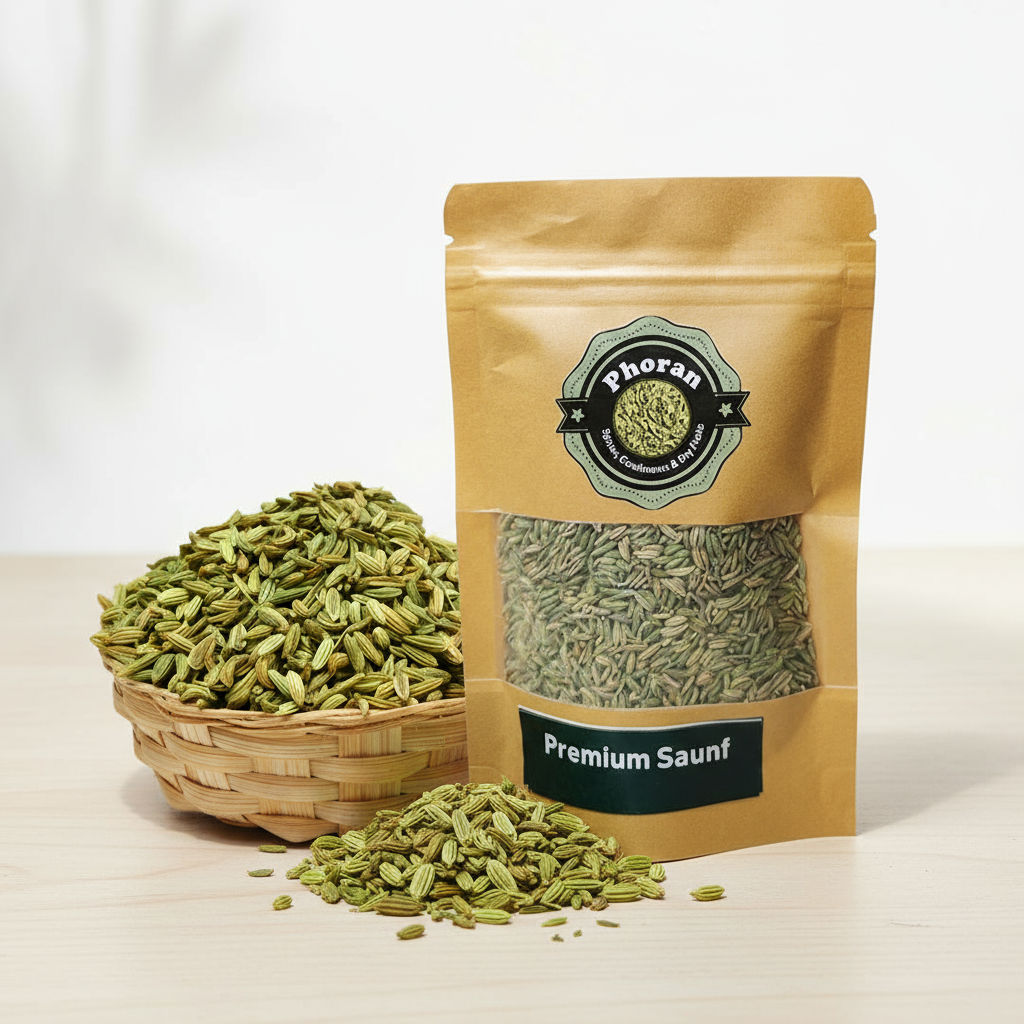
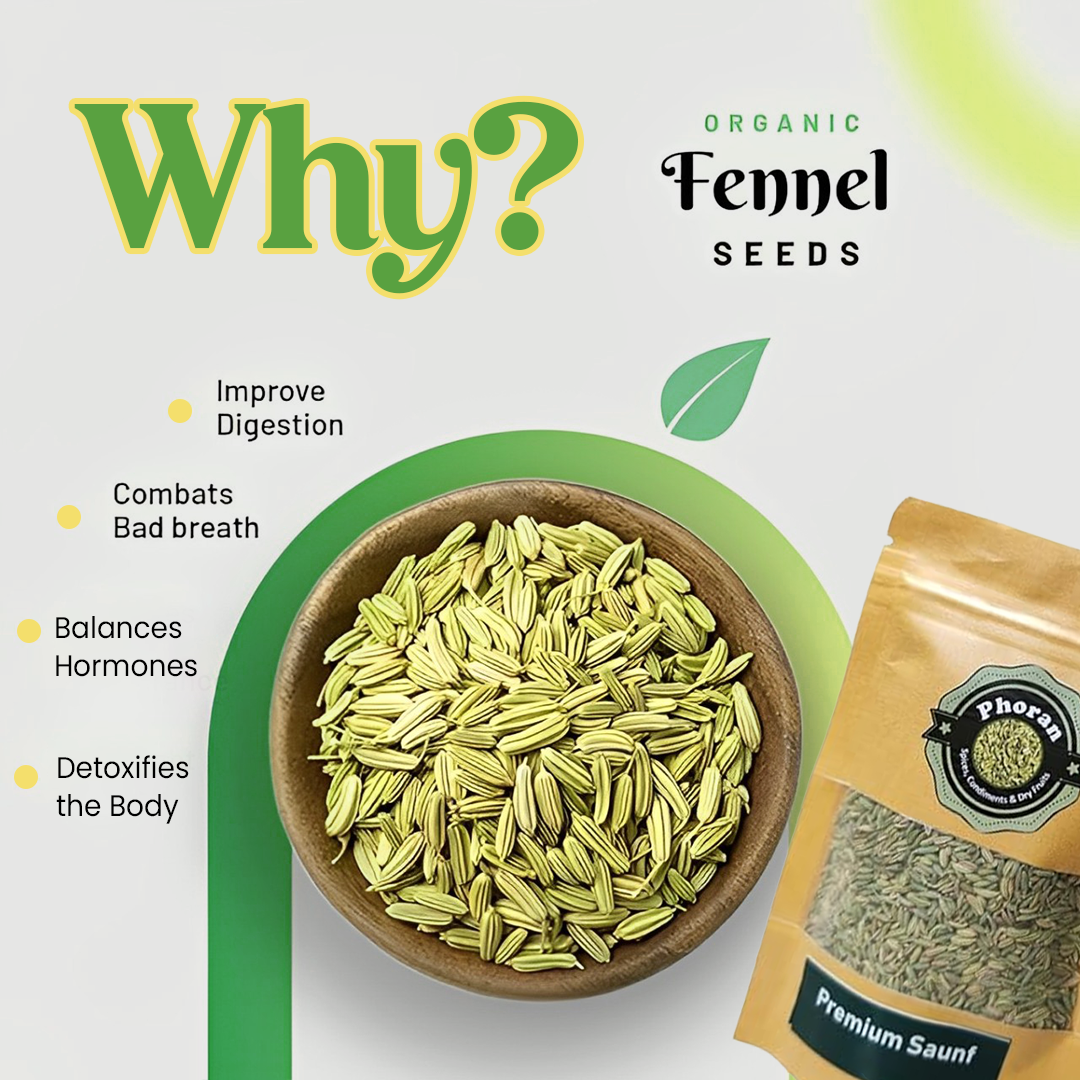
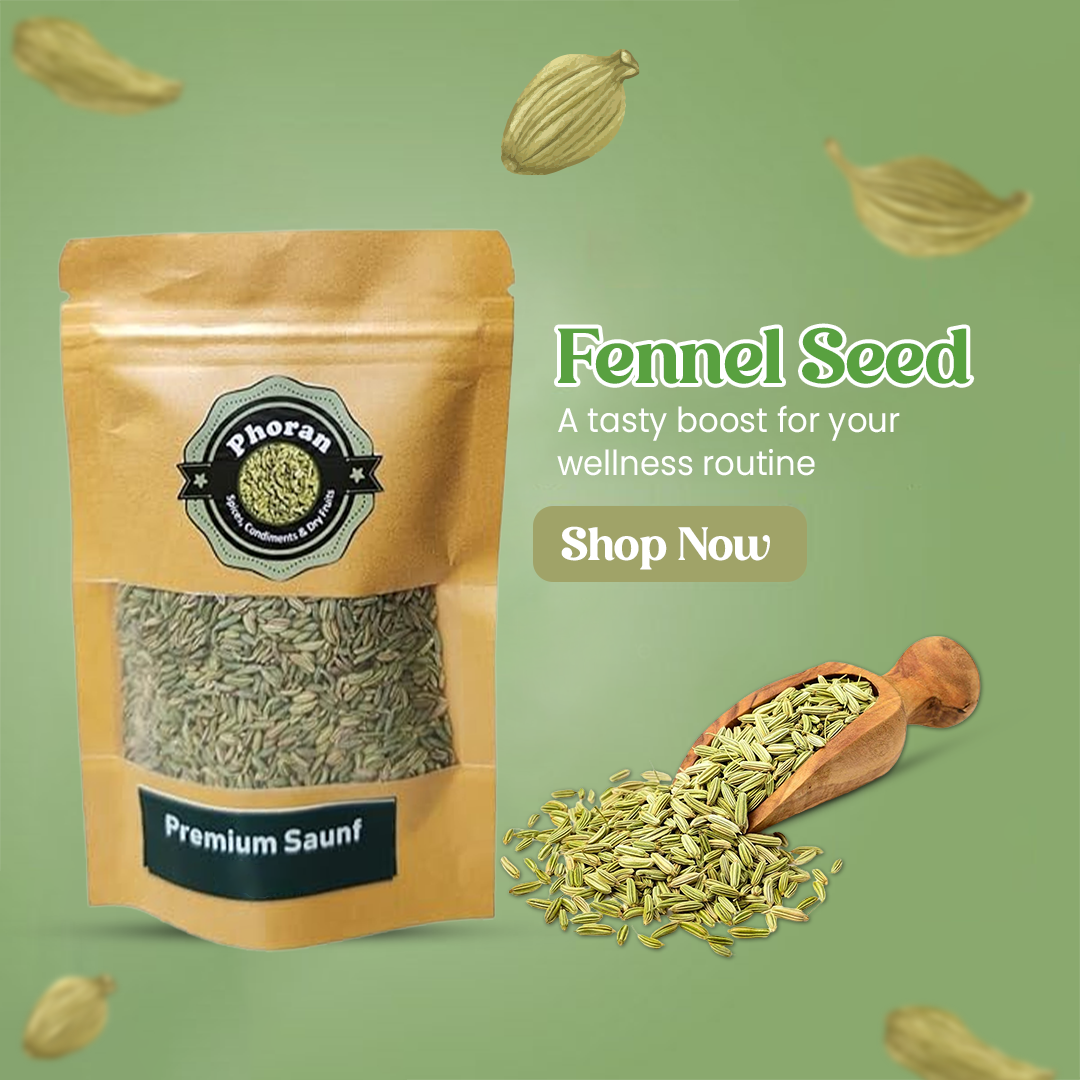
Saunf is one of the most versatile whole spices in Indian cooking — sweet and anise-like, it plays multiple roles depending on how it's used. In the pan it adds a gentle sweetness to tempering; brewed as a tea it's warming and soothing; chewed after a meal it freshens breath and settles the stomach. Phoran's saunf is sourced for bold aroma and clean, even seed size.
How to Use Saunf
Tempering (tadka): Add to hot oil or ghee with other whole spices — works well in dal, sabzi, and fish curries where a sweeter aromatic note is welcome
Mukhwas (mouth freshener): Dry roast saunf lightly and serve after meals, plain or mixed with sugar-coated fennel and sesame
Saunf chai: Simmer 1 tsp in water with ginger and cardamom for a naturally sweet herbal tea
Biryani and pulao: Add whole seeds to the initial ghee tempering alongside other whole spices
Panch Phoran: One of the five seeds in the Bengali five-spice blend — the sweet counterbalance to mustard and fenugreek
Spice blends: Ground saunf is a component of many regional masalas including saunf-based Kashmiri cuisine
Saunf vs Anise Seeds — Are They the Same?
Saunf (fennel) and anise seeds look similar and share an anise flavour profile, but they are different plants. Fennel seeds are larger, lighter green, and sweeter with a more complex flavour. Anise seeds are smaller and have a more concentrated liquorice flavour. In Indian cooking, saunf is always the correct choice — anise seeds are not a substitute.